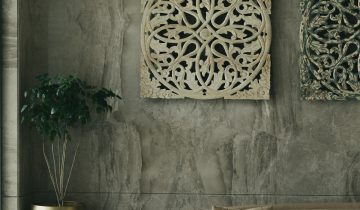
Organic modern is the design identity that the early 2020s kept reaching for but couldn’t quite name. It sits between minimalism and maximalism, between Japandi’s cool restraint and the warm abundance of Mediterranean style. In 2026, it has become the dominant aesthetic of considered interiors — and it has earned that position by being genuinely liveable.
Understanding what it actually is — and what separates it from adjacent aesthetics — is the starting point for applying it well.
Defining Organic Modern
Organic modern blends the functional clarity of contemporary design with the warmth and materiality of natural forms. It is not minimalist: it embraces layering, texture, and the kind of collected quality that makes a room feel inhabited rather than staged. It is not rustic: there are no rough-hewn beams, no reclaimed wood left intentionally raw, no deliberate references to a rural past.
What distinguishes it from Japandi — the closest neighbouring aesthetic — is warmth and softness. Japandi draws on the Japanese wabi-sabi tradition of finding beauty in imperfection and impermanence, and a Nordic design sensibility that prizes utility and restraint. The palette is often cooler, the forms more severe. Organic modern is explicitly warmer: the palette builds on terracotta, clay, sand, and warm white rather than grey, ash, and charcoal. The forms curve rather than angle.
In 2026, organic modern has shed the all-beige sterility of its early iterations. The palette is richer, the materials are more varied, and the overall approach is more confident — less a trend and more an established design language with its own coherent logic.
The 2026 Palette
The organic modern colour palette does not begin with white. It begins with warm white — a white with a yellow or pink undertone, something closer to linen or raw cotton than to a clinical paint chart white. From there it moves to oatmeal, mushroom taupe, and the complex muddy neutrals that shift between brown and grey depending on the light hitting them.
These are not flat colours. They are living ones. A wall painted in a deep mushroom taupe looks one shade at 9am and another at 4pm, and this movement is central to the experience of organic modern interiors — spaces that feel different in morning light than evening light, that are never fully resolved, always slightly in process.
The accent palette in 2026 has deepened: warm clay, aged terracotta, muted sage green, and even occasional moments of warm amber or rust, used sparingly as the colour equivalent of a texture note.
Forms: Curves Over Angles
One of the most consistent formal characteristics of organic modern design is the preference for curved and softened forms over right angles. Rounded sofas, arched doorways and mirrors, sculptural chair silhouettes, vessels and lamps with organic asymmetry — these forms echo the shapes found in natural environments and give the aesthetic its sense of ease.
This is a direct rejection of the rigid rectilinearity that defined contemporary design through the 2000s and 2010s. A room composed entirely of right angles has a certain precision but little warmth. Introducing curved forms — even one or two — immediately softens the register of a space without sacrificing its sense of order.
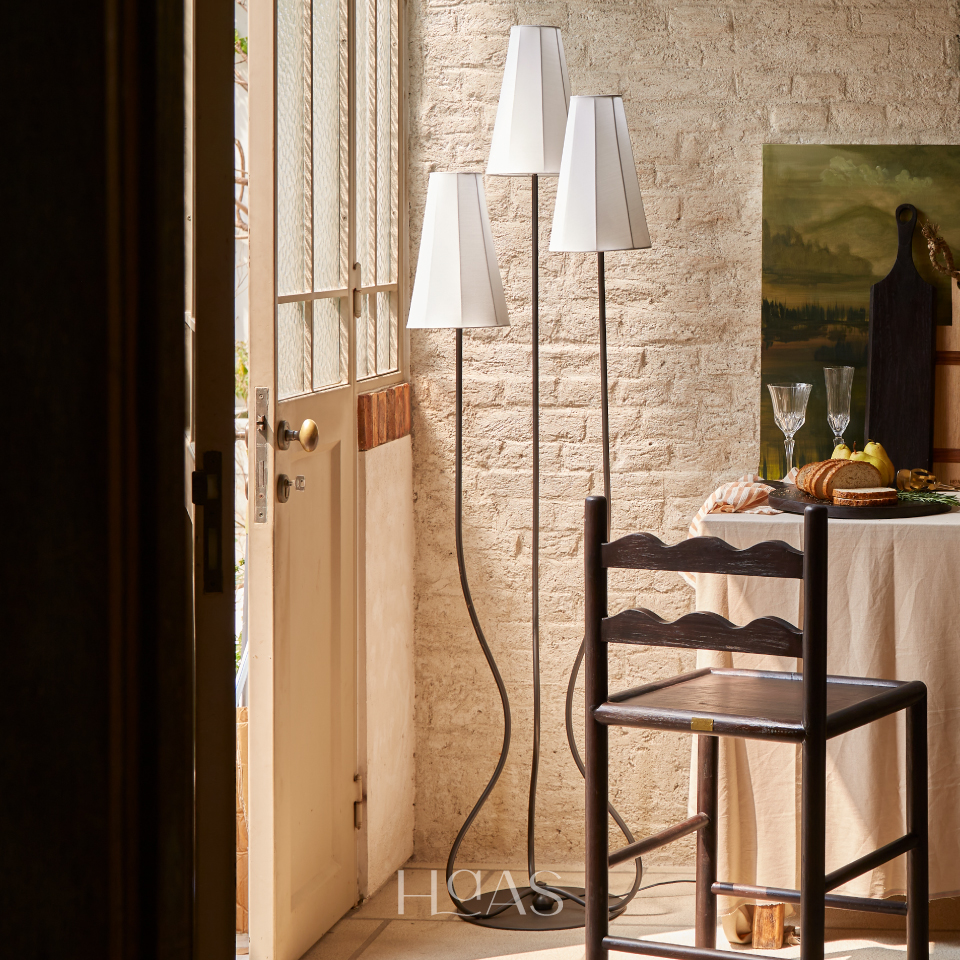
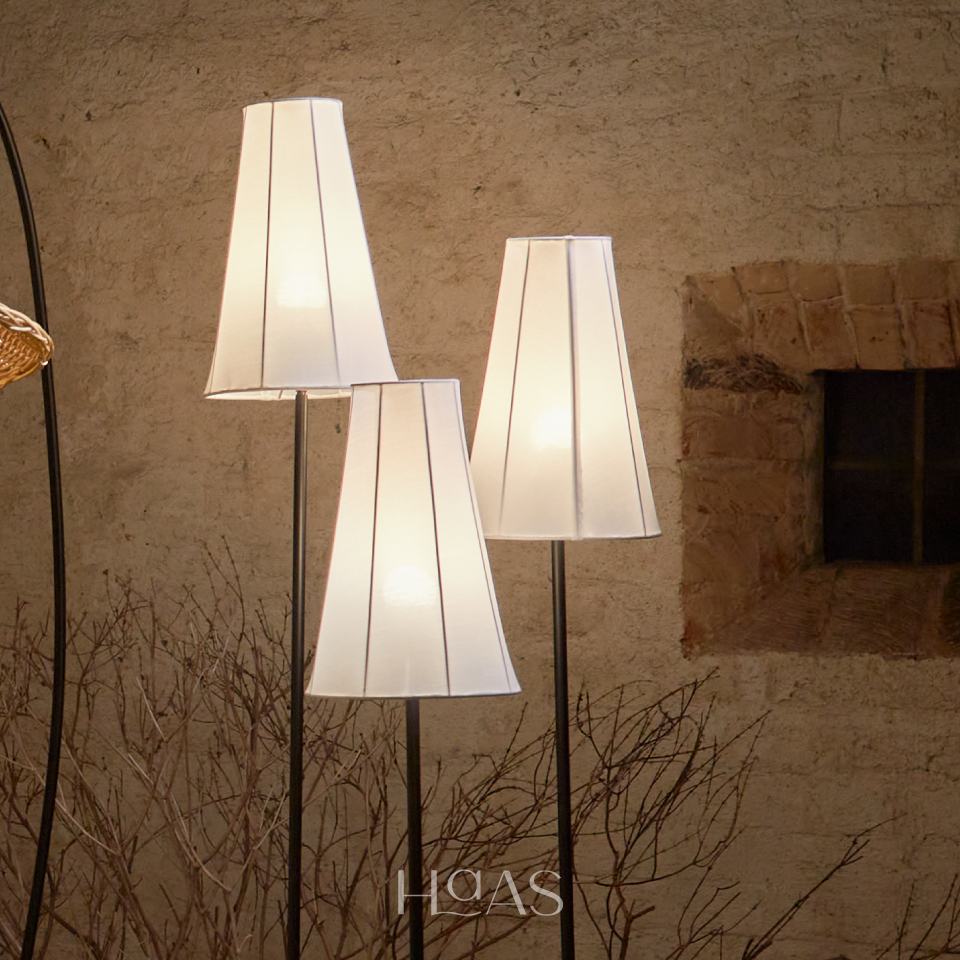
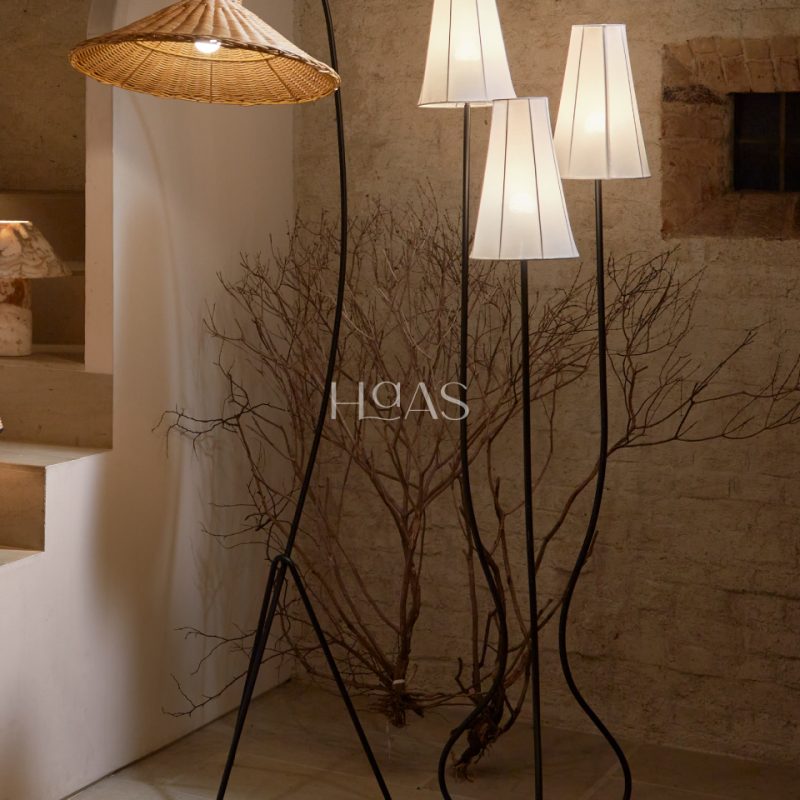
The sculptural quality of individual pieces matters here. A rattan lounge chair with a naturally curved back, an arched floor lamp, a pottery table lamp with an irregular glaze — these contribute to the accumulated softness of organic modern rooms through their form, not just their material.
Materials: Heavy Lifting in a Quiet Palette
Because the organic modern palette is restrained, materials must carry the visual interest that colour does not. This places significant demands on material selection — and rewards choosing surfaces with genuine texture and natural variation over smooth, uniform alternatives.
The essential material palette for organic modern interiors in 2026: matte-sealed reclaimed oak or similar warm-toned hardwood; honed travertine or brushed limestone for hard surfaces; slubby heavyweight linen for upholstery and curtains; nubby bouclé as an accent textile; braided or natural jute and wool for rugs. Each of these materials has a different visual weight and tactile quality, and layering them within a room creates the depth that organic modern requires.
The rule of restraint applies: not every surface needs to be textured, and not every material needs to be natural. A smooth plaster wall allows a rattan chair to be seen clearly. A limewash ceiling provides interest overhead without competing with the textured materials at eye level. The edit — what you choose not to include — is as important as the selection.
Room by Room
Living room: Anchor with a sofa in heavyweight linen or bouclé (or one of each, mixed). Add one rattan or sculptural lounge chair in a position that creates a conversation grouping rather than a television-facing configuration. Choose a natural fibre rug with visible texture underfoot. Keep the surfaces spare: one or two objects of quality rather than a styled arrangement of many objects.
Bedroom: Organic modern bedrooms are defined by layered textiles and warm materials. A linen duvet cover, a chunky knit throw, a pottery or marble table lamp on each side. The palette should be even warmer here than in the living room — this is the room that most directly benefits from the enveloping quality of earthy tones.
Entry: The entry is where organic modern makes its first statement. A textured plaster or limewash wall, a single well-chosen piece — a console, a lounge chair, a lamp — and space. The entry should breathe. Clutter at the entry undermines the entire aesthetic before it has begun.
Warmth Without Clutter
The central discipline of organic modern design is knowing when to stop. The warmth of the aesthetic — the layered textiles, the varied materials, the collected quality — can tip into overwhelm if the edit is not rigorous. Every element should be present because it contributes to the whole, not because it fills a gap.
The rooms that achieve organic modern successfully are not the most decorated. They are the most considered: spaces where every material was chosen, every form was deliberate, and every surface was given enough room to be seen.
Curated Selection
Shop the Look
Bring organic warmth into your space — curved forms, natural fibres and sculptural lighting that feel grown, not designed.

Akaylee Series AKQ-03
Price range: Rp 265,98 through Rp 396,18Damica Side Table
Rp 737,18Winne Armchair
Rp 2.039,18Voza Armchair
Rp 1.543,18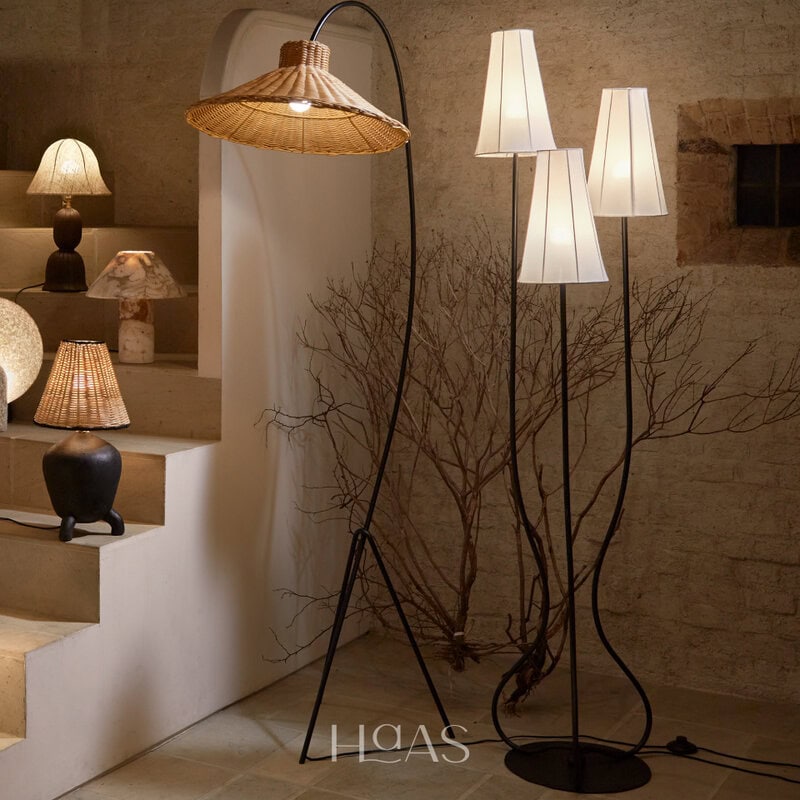
![HAAS Jinara Floor Lamp]()
![HAAS Jinara Floor Lamp]()
![HAAS Jinara Floor Lamp]()
HAAS Jinara Floor Lamp
Rp 272,79
Letion Lounge Chair
Rp 1.791,18