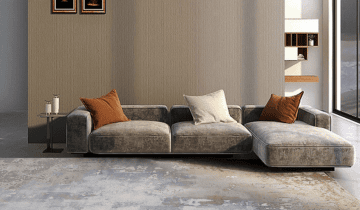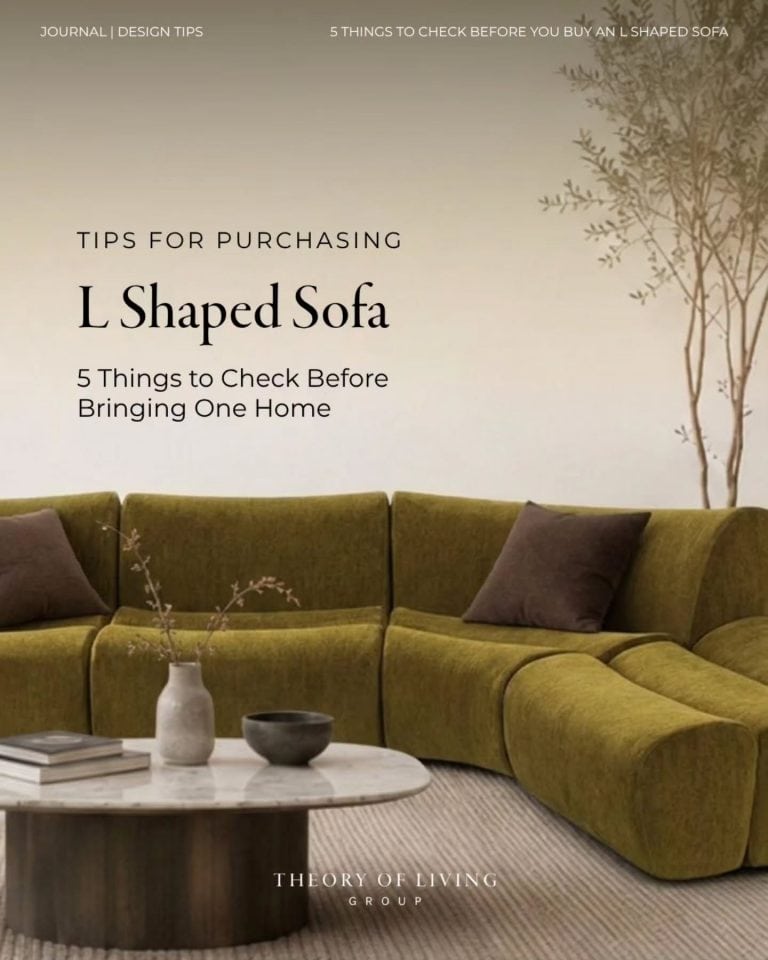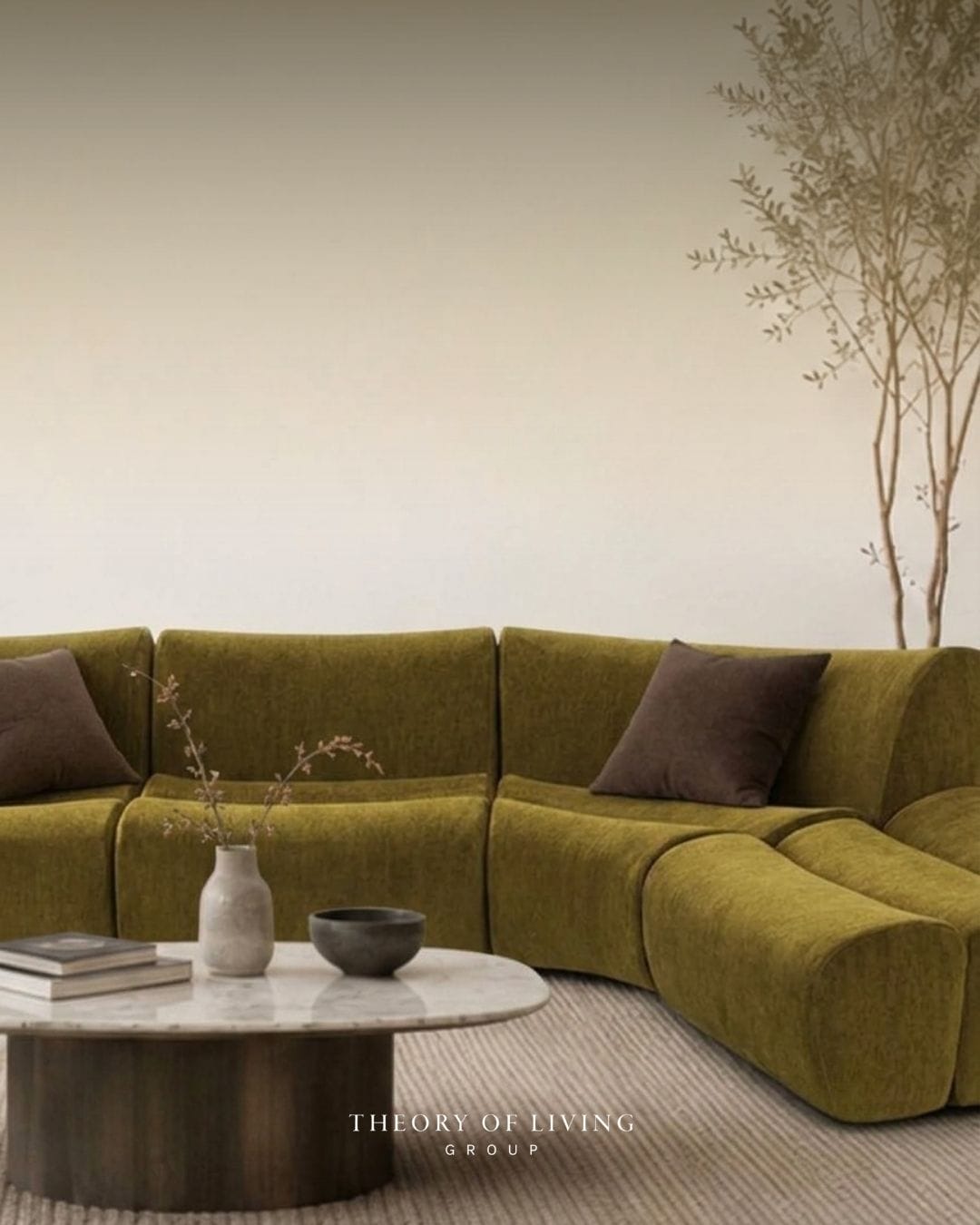
An L-shaped sofa can instantly define a living room. It creates a generous place to sit, naturally frames a space, and brings a sense of comfort that is difficult to achieve with a collection of separate seating pieces.But choosing the right L-shaped sofa is about more than finding a silhouette you love.
The best sofa should work with the architecture of your room, allow people to move comfortably, suit the way you live, and feel right in everyday use. A beautiful piece can still feel wrong if it is too large for the room, blocks circulation, or arrives through a doorway it cannot fit through. Before choosing your next L-shaped sofa, here are five things worth considering.
1. Before You Buy L-Shaped Sofa, Measure the Pathway
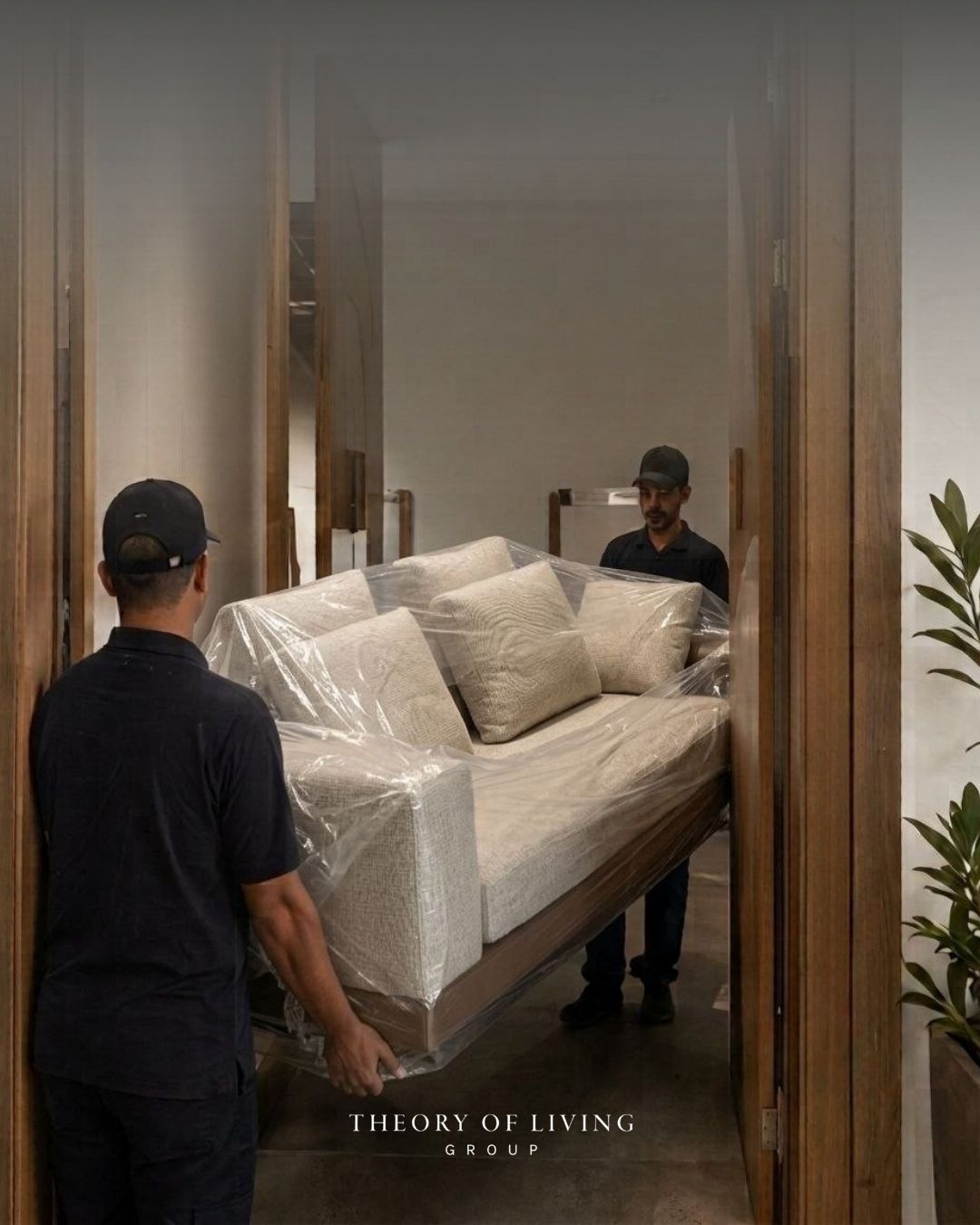
One of the most overlooked parts of buying a large sofa happens before it even enters the room. Measuring your living room is important—but so is measuring the journey the sofa will take to get there. Consider the width and height of:
- Entrance doors
- Hallways
- Staircases
- Lifts or elevators
- Narrow corners and turns
- The final doorway into the room
An L-shaped sofa has a larger footprint than a conventional sofa, and its proportions can make delivery more complicated than expected. Before purchasing, measure both the available space and the access route. A simple rule: never assume that because a sofa fits your floor plan, it will automatically fit through your home.
A useful measurement checklist:
- Start with the sofa’s overall width, depth, and height. Then compare those dimensions with the narrowest point along the delivery route.
- Also consider ceiling height, door swing, and whether the sofa can be rotated through corners.
- A few extra minutes with a measuring tape can prevent a very expensive delivery problem later.
2. Choose the Right L-Shaped Sofa Orientation
An L-shaped sofa is directional. The position of its chaise or extended section influences how your entire living room functions. This is where left-facing and right-facing configurations become important. Instead of choosing based purely on appearance, look at how the sofa interacts with the room.
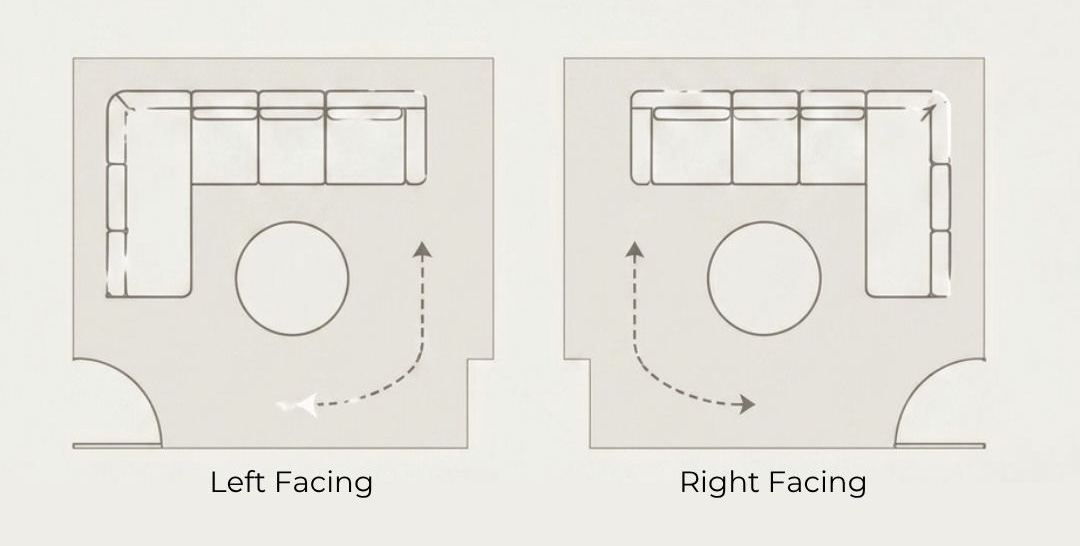
- Where are the main entrances?
- Where does the natural walking path run?
- Where is the television or focal point?
- Which side should remain open for movement?
The extended section should support the room rather than interrupt it. For example, if one side of your living room is a primary walkway, placing the chaise there may make the room feel more enclosed. Turning the configuration around could create a much more natural flow.
Think in terms of circulation
A well-designed living room should feel effortless to move through. When planning your sofa placement, leave enough breathing room around entrances, pathways, coffee tables, and other furniture. The goal is not simply to fill the room, but to create a comfortable relationship between each piece. This is especially important in modern interiors, where negative space is often just as valuable as the furniture itself.
3. Let Your Lifestyle Guide the Size
A larger L-shaped sofa is not automatically better. The right size depends on how you actually use your living room. Do you regularly host family and friends? Do you enjoy long evenings watching films? Is your living room primarily a place for quiet reading and conversation? Do you have children or pets? Your answers should influence the configuration you choose.
For homes that love to gather
A generous sectional can create a natural social setting. Instead of arranging multiple individual chairs around a room, an L-shaped sofa allows several people to sit together while maintaining a relaxed atmosphere.
For quieter spaces
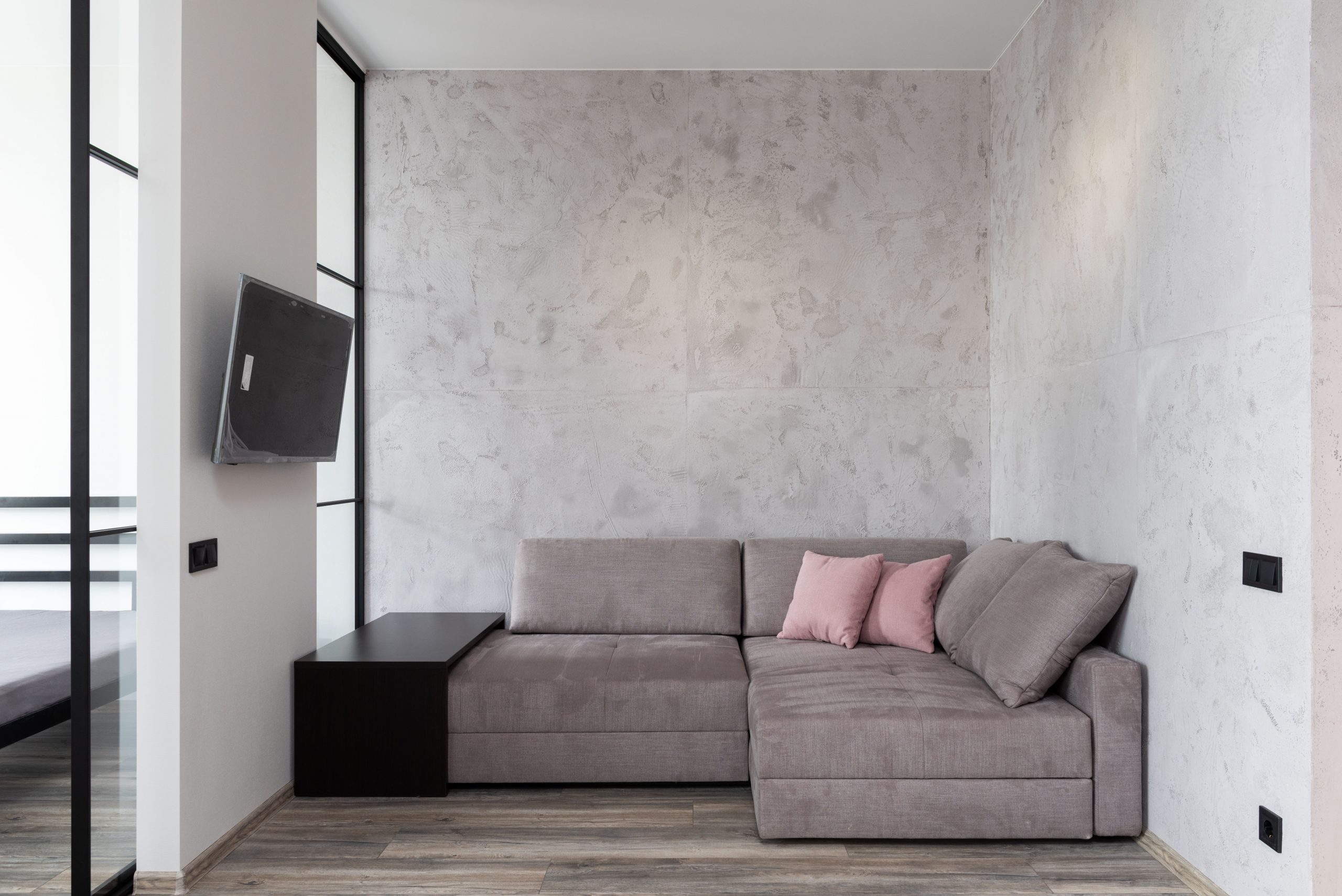
A more compact L-shaped sofa can provide the same sense of comfort without overwhelming the room. This is particularly useful in apartments or smaller living rooms, where furniture scale has a major impact on how spacious the room feels. The goal is proportion, not maximum size. A sofa should have enough presence to anchor the room while still allowing the surrounding architecture and other furniture to breathe.
4. Look Beyond the Colour: Choose Upholstery for Everyday Living
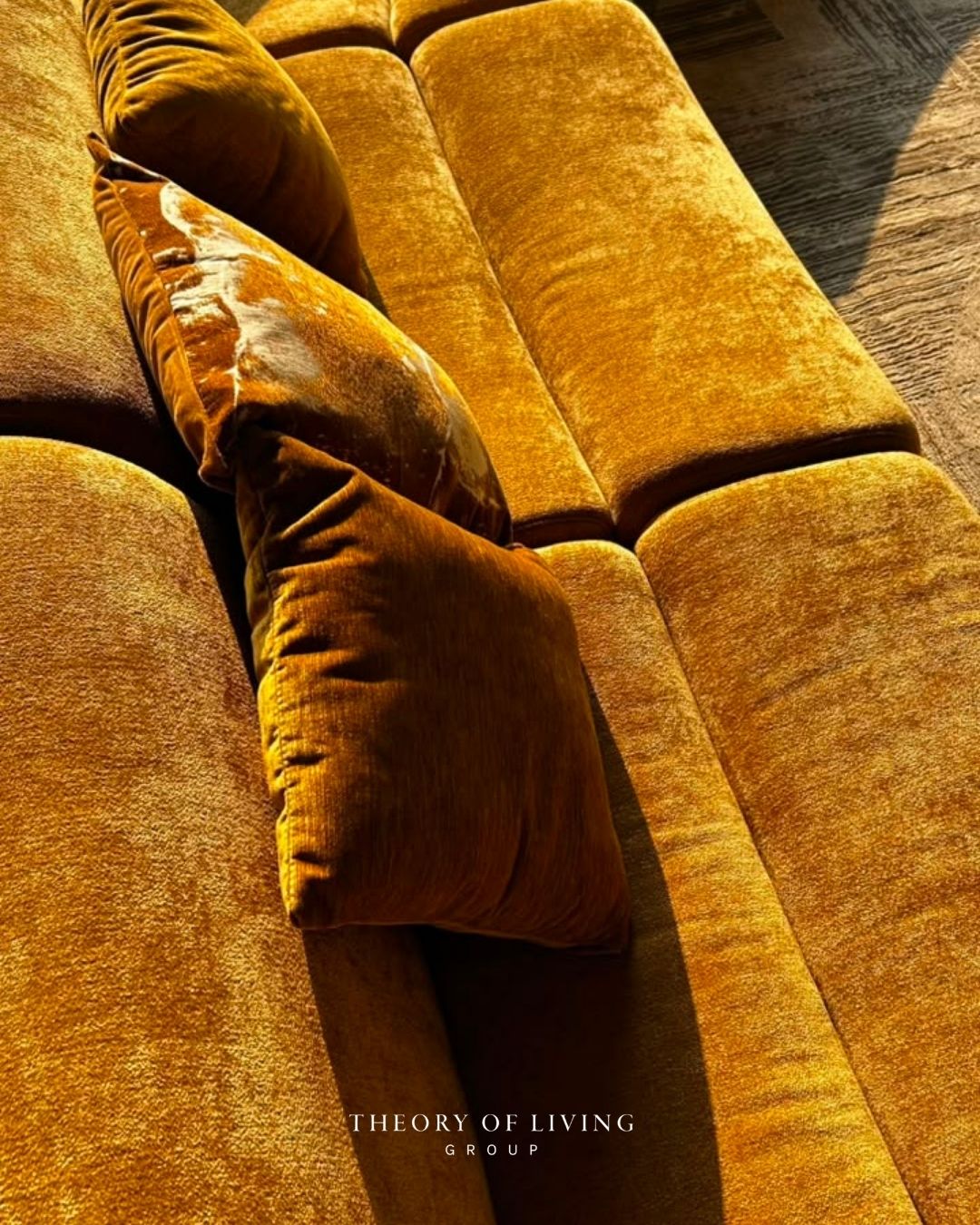
It is easy to fall in love with a sofa because of its colour or silhouette. But upholstery is something you will experience every day.When choosing a material, consider four things:
Texture
How does it feel against the skin? Does its texture complement the other materials in the room?
Durability
How well will it perform with your everyday routine?
Maintenance
How easy is it to care for and keep looking beautiful?
Comfort
Does the material contribute to the kind of relaxed experience you want from your living Room?
A sophisticated interior rarely relies on colour alone. The combination of upholstery, wood,stone, metal, glass, and textiles creates the layered quality that makes a space feel considered. For this reason, it is worth seeing and touching upholstery samples before making your final decision.
5. Experience the Sofa Before You Decide
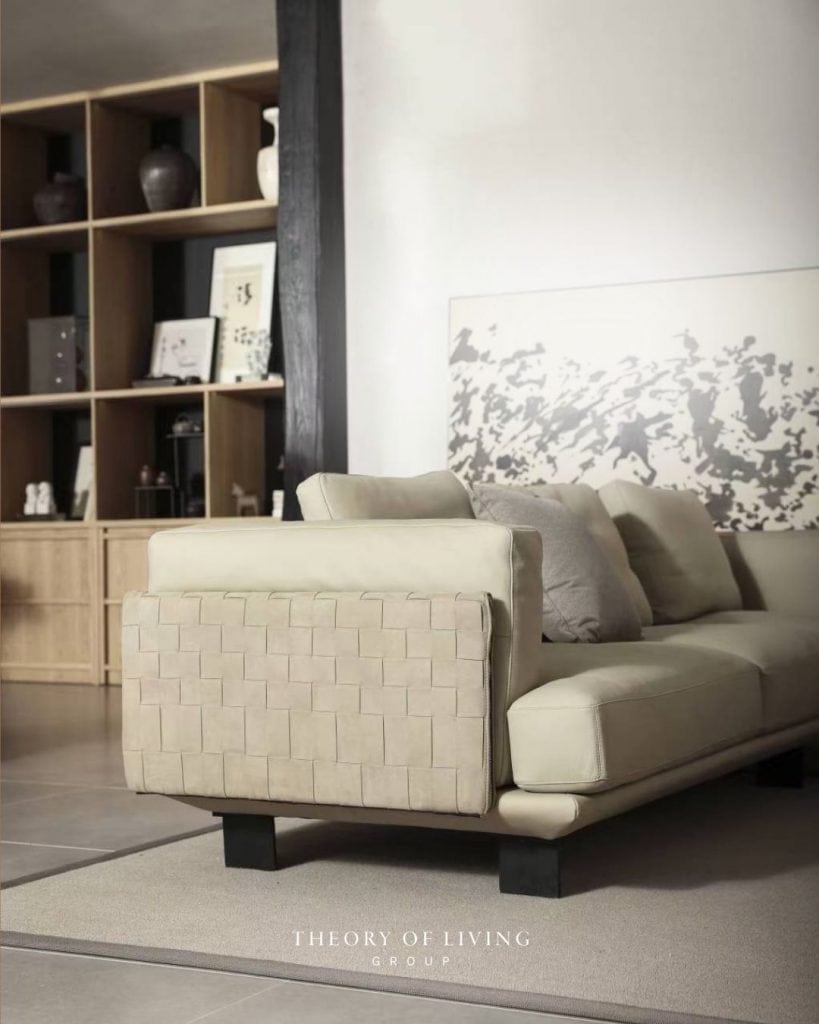
Photography can show you the shape of a sofa. It cannot completely tell you how it feels to sit on it. Comfort is personal. One person may prefer a deeper seat for lounging, while another may prefer a more upright sitting position. The height of the backrest, softness of the cushion, seat depth, armrest proportions, and upholstery texture all influence the experience.
This is why visiting a showroom can be an important part of the decision-making process. Rather than judging a sofa from a screen, take the time to:
- Sit in your usual position
- Try the deeper and shallower areas
- Feel the upholstery
- Check the seat height
- Compare different configurations
- Observe the sofa from different angles
- Imagine how it would work with your existing furniture
- Furniture is part of how we experience a home—not simply how a room looks in a photograph.
The L-Shaped Sofa Is More Than a Seating Choice
An L-shaped sofa can become the visual and functional centre of a living room. When chosen thoughtfully, it can create a place for conversation, relaxation, hosting, and everyday rituals while giving the room a clear sense of structure. But the most successful choice is rarely the biggest or most dramatic one. It is the one that feels proportionate to the room, natural to move around, comfortable to live with, and aligned with your everyday life. That is where good furniture design begins: not with filling a space, but with understanding how the space is meant to be lived in.
Experience Furniture in Person at Theory of Living
Choosing furniture is an experience of proportion, material, comfort, and touch. At the Theory of Living showroom, you can experience our furniture firsthand, explore different materials and configurations, and discover pieces that complement the way you live. Because sometimes, the right choice becomes clear only when you sit down. Visit Theory of Living and experience the difference in person.
Frequently Asked Questions
Is an L-shaped sofa suitable for a small living room?
Yes. A compact L-shaped sofa can work particularly well in a smaller living room because it combines multiple seating positions into one piece. The key is choosing a configuration that is proportional to the room and maintaining comfortable circulation around it.
How do I choose the right L-shaped sofa size?
Start by measuring your room, then consider the sofa’s total width, depth, and height. Don’t forget to account for walkways, doors, coffee tables, and other furniture. Your lifestyle should also influence the size—larger configurations work well for frequent gatherings, while compact versions may be better for quieter spaces.
What should I measure before buying an L-shaped sofa?
Measure the area where the sofa will sit as well as every part of the delivery route. Check doors, hallways, lifts, staircases, corners, and other narrow access points. The narrowest point is often the most important measurement.
Is a left-facing or right-facing L-shaped sofa better?
Neither is universally better. The ideal orientation depends on your room layout, entrances, circulation paths, and focal points. Choose the configuration that allows people to move naturally through the room without creating unnecessary obstacles. Should I try an L-shaped sofa before buying it? Ideally, yes. Sitting on a sofa lets you evaluate comfort, seat depth, height, cushion firmness, upholstery texture, and overall proportions—qualities that are difficult to judge from photographs alone.